
Have you ever stood in the supermarket aisle, comparing ‘caged’ and ‘free range eggs’ and wondered what all the fuss (and extra few dollars) is about? The cruel answer lies in how over five million hens in Australia are forced to live: confined to battery cages.
‘Battery hens’ take their name from the cages they’re housed in – and it’s probably far worse than you imagined.
Worse than a conventional cage, a battery cage is an incredibly small, restrictive wire cage with no solid ground – subjecting hens to a life lived standing on sloping wire, laying egg after egg, with no chance to perch, nest or truly rest.
So, what are battery hens, really?
And if we know they’re a critical animal welfare issue, why do systems like this exist at all?
Eggs are eggs. Or are they?
From the farm to your fridge, eggs might look the same, but the lives behind them can be vastly different. The lucky hens might have space to move, perch and nest, while others might live a life of confinement and restriction.
But beyond the carton and the label, there’s something more important to remember: hens are not just producers and commodities. They’re companions. Hens are sentient beings. They are social, intelligent animals who form complex hierarchies (it’s where the term ‘pecking order’ comes from), recognise familiar flock members and experience stress and fear.
Research also shows it’s possible they can anticipate future events, learn from experience and have distinctive personality traits.
Therefore, the way a hen lives fundamentally shapes welfare. Housing systems determine whether they can move freely or spend their life confined in ways that prioritise productivity over wellbeing.
So what are battery hens, really?
It’s not a type of hen, per se, but the houses they live in.
‘Battery hens’ refers to laying hens housed in restrictive ‘battery cages’, ones they will often live in for their entire productive lives. Battery cages were introduced in the 1950s as industrial farming expanded and egg production shifted toward large-scale, intensive systems.
The word ‘battery’ comes from the rows (AKA ‘batteries’) of identical wire cages stacked in tiers inside vast sheds. These systems were designed with one goal in mind: maximise output while using the least possible space and keeping costs low. Efficiency became the priority, and the hen’s natural behaviours, like perching, nesting, dust bathing and roaming, were engineered out of the system.
What’s so bad about battery cages?
Designed to optimise production, battery cages are entirely wire (including the floor, walls and ceilings) so eggs can roll away on a sloped surface and drop straight onto a conveyor belt. That means there’s no solid ground or bedding – just metal underfoot for a lifetime.
The worst bit, Australian standards make this cruelty legally acceptable. According to the Australian Animal Welfare Standards and Guidance for Poultry, caged housing systems must provide at least 550cm2 of floor space – that’s about half the size of an A4 sheet of paper! While the implementation of these standards sits with individual states and territories, even if a farmer meets these standards, hens can’t nest, perch or display any natural behaviours.
It’s no surprise these conditions have health impacts. Wire floors can contribute to foot and leg injuries and sustained, high egg production (with much higher outputs than, say, a free-range system) places significant strain on their bodies.
Bone weakness, feather loss, wounds from overcrowding and chronic stress behaviours are common consequences. There is nothing ‘natural’ about this form of egg production.

How are battery eggs different to ‘barn laid’, ‘cage free’ or ‘free range’ eggs?
When you’re trying to make an informed purchase decision, the different methods can be confusing.
Barn-laid or cage-free eggs come from hens kept indoors in large sheds. They aren’t confined to cages and can move around inside.
Free-range hens, on the other hand, must have ‘regular’ access to the outdoors and are typically housed in sheds overnight. Under the Australian Consumer Law (Free Range Egg Labelling) Information Standard 2017, eggs can be labelled free range if hens have ‘meaningful and regular access’ to the outdoors and the outdoor stocking density does not exceed 10,000 hens per hectare. That’s equivalent to one hen per square metre.
Understanding what these terms legally mean can make it easier to decide what aligns with your values.
Do battery cages still exist in Australia today?
Yes. Battery cages are very much legal in Australia (except in the ACT, where they have been banned since 2014). And we’re lagging behind many parts of the world – battery cages have been banned in Europe since 2012.
In July 2023, all of Australia’s Agriculture Ministers agreed to implement the national Animal Welfare Standards and Guidelines for Poultry, including a commitment to phase out barren battery cages by 2036.
But 2036 is still a decade away.
What’s worse, there’s not a lot of clarity on how the transition will work in practice, including how consistently the phase-out will be implemented across the country and what housing systems will replace them.
With an estimated five million hens still confined to battery cages in Australia today, it’s clear we’re not doing enough.

So what happens to battery hens once they’ve finished laying?
Once a battery hen’s productivity declines, they’re considered ‘spent.’ A horrible word for a horrible reality.
This usually happens at around 16 – 18 months of age, roughly a quarter of their natural lifespan, when their fragile bodies no longer meet the commercial egg-laying standards. They’re replaced with younger hens who face the same fate while the ‘spent’ hens are often sent to slaughter.
Rewrite the story: rescue a battery hen
Hens don’t deserve to be culled just because they’re not laying at peak production.
They deserve a life where they can experience love, compassion and safety – a life where their worth is valued beyond what they give.
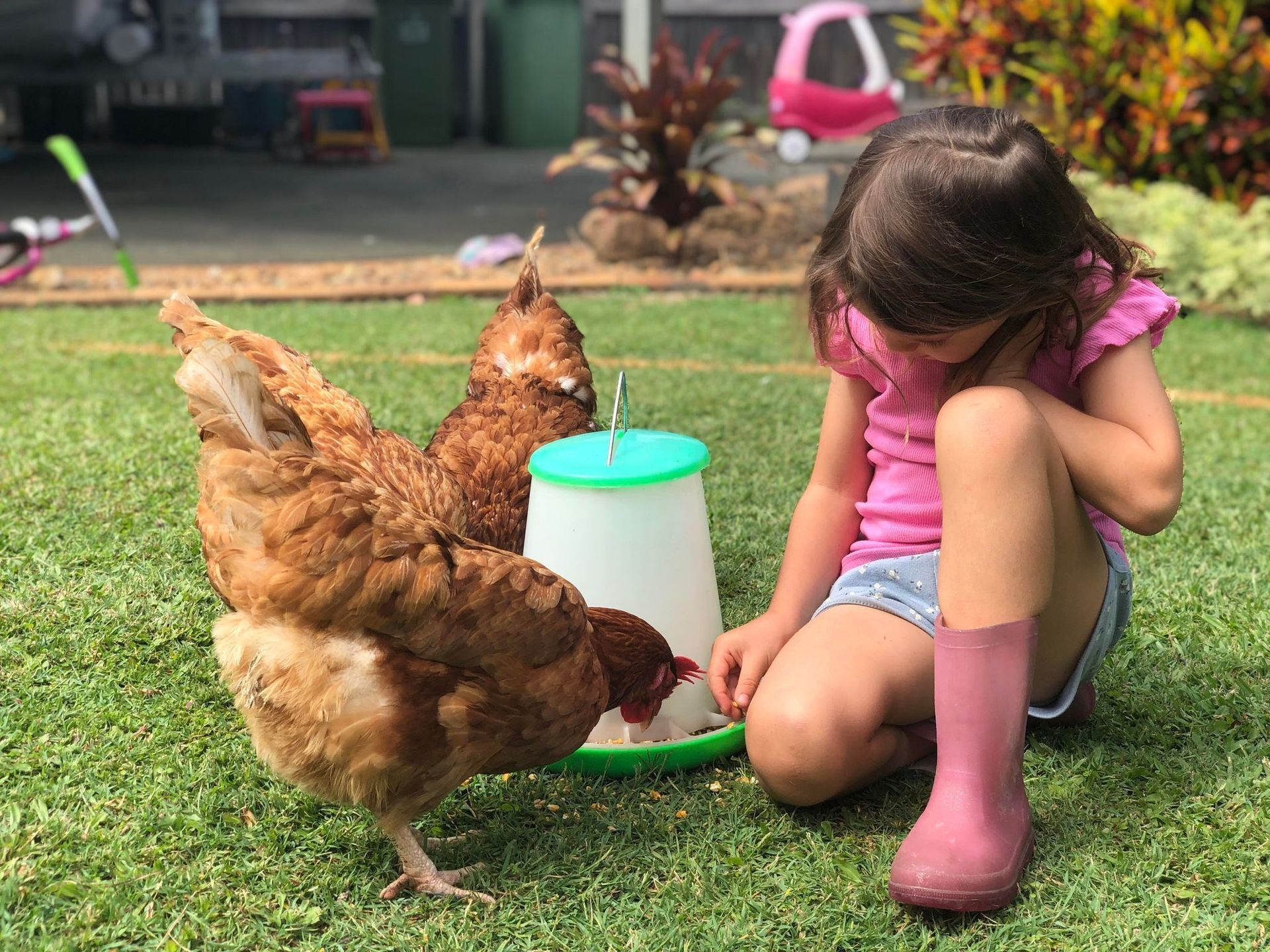
The reward for adopting a battery hen goes well beyond eggs. Watching her step onto grass for the first time, seeing her personality emerge, her confidence build and her quirky habits unfold is a powerful reminder that hens are so much more than a production unit.
At ‘Til The Cows Come Home, we run regular Rescue Hen Adoption Days so you can find a friendly companion and more hens can retire knowing care, love and freedom.
Upcoming hen adoption days
Throughout the year, we hold Rescue Hen Adoption Days in various regions across many states in Australia. Our hen adoption days can pop up in your region at any time – so keep an eye on our website and socials.
All adopters must have a secure, predator-proof coop ready before collection. Hens need access to safe free-range space during the day, fresh food and water and ongoing veterinary care if required.
Most importantly, adopters commit to caring for their hens for life, regardless of how long they continue laying. We see hens as companions, not commodities.
Ready to save a life? Join an upcoming Rescue Hen Adoption Day, spread the word within your community or support our rescue work through donations or volunteering.
